

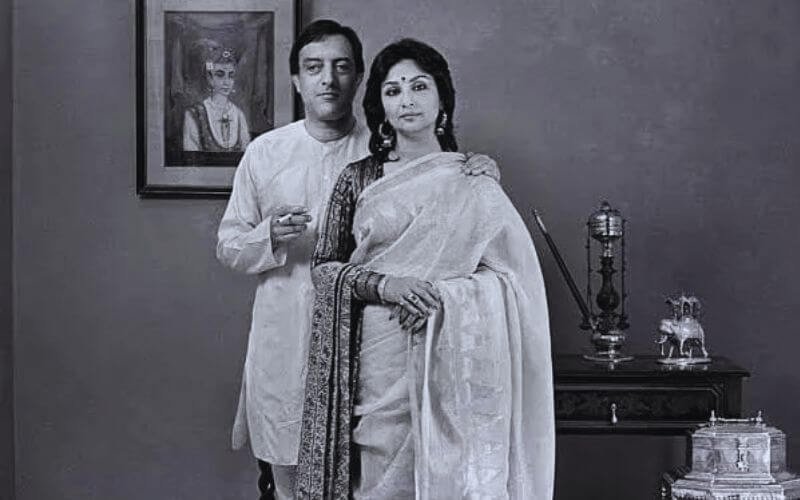
The Tagore name carries enormous cultural weight in India. For most people, it immediately brings to mind Rabindranath Tagore Nobel laureate, poet, and one of the most significant figures in Indian cultural history. But not every person who bore this name lived in the public eye.
Gitindranath Tagore is one such figure. He is known primarily through genealogical records and as the father of acclaimed actress Sharmila Tagore. Beyond that, public information about him is genuinely limited and this article won’t pretend otherwise.
What we can do is look at what confirmed records tell us about Gitindranath, understand where his branch of the family fits in, and explore why the Tagore name carries the significance it does.
Who Gitindranath Tagore Was
Based on genealogical records specifically his profile on the family tree platform Geni Gitindranath Tagore was a member of the Tagore family of Bengal. He was the son of Kanakendranath Tagore and Suramasundari Tagore.
He married Ira Tagore, and together they had children including Sharmila Tagore, Tinku Kundu (née Tagore), and at least one additional child listed privately on the family tree.
That is essentially the extent of what publicly available sources document about him. There are no widely accessible records of his career, profession, or dates. He left no notable public footprint of his own in the historical record at least not one that has been digitized or widely cited.
This is worth stating plainly: Gitindranath appears to have lived outside the public eye. The absence of detailed biographical information reflects the limits of documented history, not necessarily the limits of his life. Many people from prominent families live quietly, and history tends to record only those who step into public roles.
Think of it this way most people know a great deal about a celebrity but almost nothing about that celebrity’s grandparent, even if the grandparent was a perfectly full and meaningful person. Gitindranath occupies a similar position, known mainly because of who his daughter became.
The Tagore Family Origins and Cultural Standing
To understand why the Tagore name draws so much curiosity, it helps to know where the family came from and what they built over generations.
The Tagore family were Bengali Hindu Pirali Brahmins, originally from Pithabhog in what is now Khulna, Bangladesh. Their ancestry traces back to Deen Kushari, who was granted a village named Kush by Maharaja Kshitisura and became its chief. The family later took a version of that village’s name as their own.
Over time, the family migrated to Calcutta (now Kolkata), where they became successful entrepreneurs and influential cultural patrons. The name “Tagore” itself is an anglicized version of the Bengali word “Thakur” a term of respect traditionally associated with Brahmins.
What made this family exceptional wasn’t just wealth or social standing. They played a central role in what historians call the Bengal Renaissance a broad cultural and intellectual movement that swept through 19th-century Bengal, touching literature, music, art, religious reform, and social change.
Multiple generations of the Tagore family contributed to this movement. They weren’t just passengers in Indian history they helped shape it.
Rabindranath Tagore and the Legacy Gitindranath’s Branch Inherited
Any conversation about the Tagore family eventually arrives at Rabindranath Tagore and for good reason. He is the family’s most recognized figure by a significant margin.
Rabindranath was a Bengali poet, playwright, composer, essayist, and painter. He didn’t just work in one creative field he reshaped multiple fields at once. He introduced new forms and colloquial language into Bengali literature at a time when such choices were considered bold.
In 1913, he became the first non-European and the first Asian to win the Nobel Prize in Literature. The prize was awarded for his poetry collection Gitanjali, which had been translated into English and reached audiences far beyond Bengal.
He also wrote the poem that became India’s national anthem, “Jana Gana Mana” derived from his 1911 Bengali poem “Bharoto Bhagyo Bidhata.” Generations of Indian schoolchildren have sung these words without necessarily knowing their origin.
Beyond his writing, Rabindranath was a dedicated educational reformer. He founded Santiniketan, an experimental school built on open-air learning and creative freedom. It eventually grew into Visva-Bharati University, which continues to operate today.
He was not alone in shaping the family’s broader legacy. Dwarakanath Tagore an earlier family figure was a notable businessman who engaged in significant commercial ventures. Debendranath Tagore, Rabindranath’s father, co-founded the Brahmo Samaj, a religious reform movement that challenged caste hierarchy and promoted rational, ethical spirituality.
Rabindranath himself had five children: Madhurilata (known as Bela), Rathindranath (Rathi), Renuka (Rani), Mira (Atasi), and Samindranath (Sami). Some of them, particularly Rathindranath and Mira, went on to support his educational and cultural projects at Santiniketan.
Because Rabindranath’s influence is so woven into Indian public life from school curricula to national ceremonies anyone who carries the Tagore name naturally draws curiosity. People want to know: how does this person connect to that lineage?
In Gitindranath’s case, he belongs to the extended Tagore family network. Genealogy records place him as the son of Kanakendranath Tagore, situating him within this wider family. However, the precise generational distance between his branch and Rabindranath’s direct line is not clearly spelled out in mainstream sources, and it would be unwise to claim a specific connection without strong corroboration.
Sharmila Tagore: The Public Face Connected to Gitindranath
The reason most people search for Gitindranath Tagore at all is because of his daughter, Sharmila Tagore.
Sharmila became one of India’s most celebrated actresses. She worked with legendary Bengali filmmaker Satyajit Ray early in her career and later became a major name in Hindi cinema. Her work spanned decades and earned her recognition across both art-house and mainstream film circles.
She also served as the chairperson of the Central Board of Film Certification (CBFC), stepping into a significant institutional role beyond acting.
Her marriage to cricketer Mansoor Ali Khan Pataudi the Nawab of Pataudi and a celebrated captain of the Indian cricket team brought together two of India’s most recognizable names. Their children, including actors Saif Ali Khan, Saba Ali Khan, and Soha Ali Khan, continue to be well-known public figures.
When people see that Sharmila carries the Tagore name and want to understand her paternal side, they inevitably arrive at Gitindranath. He is the link between the storied Tagore lineage and the modern public life his daughter built.
Why Public Information About Gitindranath Is So Limited
It’s worth addressing this directly, because some readers may find it surprising that so little is documented about a man from such a famous family.
The truth is that famous families are made up mostly of private individuals. For every Rabindranath Tagore, there are dozens of relatives whose lives were lived away from public attention. Before the internet, before widespread media coverage, it was entirely possible for a person to live a complete life and leave behind only a name in a family record.
Gitindranath appears to be one of those individuals. His name appears in genealogy databases, his family relationships are recorded, and his daughter became famous but his own story, whatever it was, has not entered the public record in any detailed way.
That is not unusual, and it is not something to fill with guesswork. For those researching this topic, Savvy Business Mag and similar resources that focus on factual, well-sourced information can be helpful guides when navigating the line between what is known and what is merely assumed.
Conclusion
Gitindranath Tagore was a member of one of Bengal’s most historically significant families. Genealogical records confirm his parents, his spouse, and his children including Sharmila Tagore, who went on to become one of India’s most respected actresses.
Beyond that, the public record is quiet. He does not appear to have been a public figure himself, and filling that silence with invented details would do a disservice to both him and the reader.
What we can say with confidence is that he was part of a family whose contributions through Rabindranath’s Nobel Prize-winning literature, Debendranath’s religious reform work, and generations of cultural engagement helped shape modern India in lasting ways. Gitindranath carried that name and passed it on to a daughter who would carry it further into the public eye.
Sometimes, that is exactly what a family lineage looks like: most branches are quiet, and a few grow tall enough to be seen from a
Also Read:
