

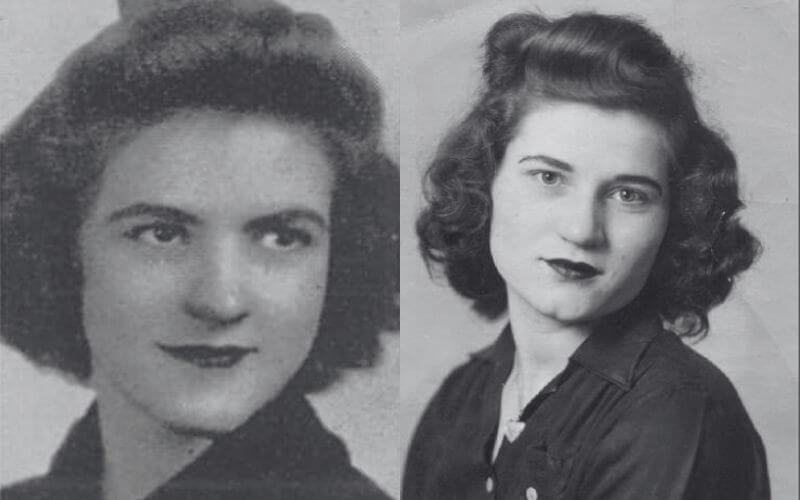
Some names appear in celebrity family trees with almost no public record attached to them. “Lillian Mickie” is one of those names. If you’ve searched for her online and come back empty-handed, that’s not a mistake it’s actually very common for names like this one.
This article explains why the search returns so little, what “Mickie” likely means in a genealogy context, and how a name like this fits into the larger story of a famous person’s family history. We’ll also look at how genealogists typically piece together information on low-profile relatives when public records are thin.
Why “Lillian Mickie” Has Almost No Public Footprint
If you’ve searched for “Lillian Mickie” on Ancestry or similar genealogy platforms, you’ve probably noticed something odd. Instead of a clear result, the database returns near-name alternatives things like “Lillian L Fickin” or “Lillian Grace Bickle.” There is no distinct, standalone public profile indexed under the exact name “Lillian Mickie.”
That’s not a sign that the person didn’t exist. It simply means she lived outside the public eye. The vast majority of people in any celebrity’s family tree never sought public attention and left no newspaper trail behind them.
Names like this one tend to surface through private or semi-private family trees on platforms like MyHeritage or Ancestry. They were added by a family member who had direct knowledge not by a journalist or biographer. That’s why you can find the name in a tree but can’t find an article about the person.
“Mickie” as a Nickname, Not a Surname
This is where a lot of the confusion starts. In genealogy records, “Mickie” and “Mickey” frequently appear as nicknames placed in quotation marks between a formal first name and a legal surname. They are not always last names.
So a woman recorded in a family tree as Lillian “Mickie” [Married Surname] could easily be searched as “Lillian Mickie” by someone who misreads the formatting. The nickname gets mistaken for a surname, and suddenly the search produces no useful results.
This nickname pattern was genuinely common for women named Lillian throughout the 20th century. Here are two well-documented examples that show exactly how it works:
- Lillian “Mickey” Zimmerman Masters (1934–2023) Her obituary, filed through Young–Nichols Funeral Home, shows that “Mickey” was a lifelong familiar name used between her formal first name and her legal married surname. She was born in Brazil, Indiana, and her full story only becomes clear through the obituary, not through any public career.
- Lillian Maxine “Mickie” Heaton Alley (1923–1981) Her Find a Grave memorial (#28062098) records “Mickie” as a nickname in quotation marks. Her legal names are “Lillian Maxine Heaton Alley.” The memorial lists her parents and spouse, showing how family relationships get preserved in these records long after someone passes.
Neither of these women is confirmed to be the same person as the “Lillian Mickie” in any particular celebrity’s tree. They are examples of the pattern and the pattern matters. If “Mickie” is a nickname, then the correct field to search is the actual legal surname, not “Mickie.”
How Non-Famous Relatives Fit Into a Celebrity Family Story
When people explore the family tree of a well-known person, they often expect every name to come with a biography. That’s not how real families work. Most relatives of celebrities are completely ordinary people who never appeared in a headline.
A relative like “Lillian Mickie” may represent what genealogists call a bridge generation. She could be the link between older immigrant or pioneer ancestors and the more public figures who came after her. Her importance in the tree is relational, not biographical. She matters because of who she connects not because of anything she did publicly.
Think of it this way: a celebrity’s family tree is like a large city. The famous person is the landmark everyone photographs. But most of the city is made up of quiet streets and ordinary houses that nobody covers in the press. Relatives like Lillian Mickie are those houses. They make up the foundation of the family, even when there’s no spotlight on them.
This pattern is extremely common. Many readers find an unfamiliar name attached to a celebrity’s genealogy profile and simply want to know: who was this person, and why are they in the tree? Often, the honest answer is that she was a real relative whose life was private and that’s perfectly normal.
What Records Usually Exist for Women Like Lillian Mickie
For women born in the early-to-mid 20th century with no public career, the paper trail runs through a specific set of documents. Understanding what those documents are helps set realistic expectations for your search.
The most common sources are:
- Census records — These capture household members at a specific point in time and often include age, birthplace, and occupation.
- Marriage certificates — Useful for confirming a legal surname change and connecting maiden and married names.
- Children’s obituaries — A woman like Lillian Mickie may not have had her own obituary published, but she is often mentioned in the death notice of a child or spouse.
- Cemetery indexes — Find a Grave and similar platforms often preserve names, dates, and basic family connections that appear nowhere else online.
- Family-submitted Ancestry trees — These are frequently the only searchable online reference for someone at this level of privacy.
It’s worth noting that most women of this era who lived private lives rarely appear in their own standalone obituary. Local newspapers covered them occasionally, but coverage was inconsistent. More often, their names survive only because a descendant or family member submitted a record to a genealogy platform.
That’s not a gap in history it’s just how private life worked before the internet.
How to Avoid Mistaken Matches
One genuine risk when searching for someone like “Lillian Mickie” is landing on the wrong person. There are multiple women named Lillian with “Mickie” or “Mickey” as a nickname in various genealogy databases. They are not all the same person, and they are not all related to each other.
Before assuming an online result is the Lillian Mickie from your celebrity’s tree, cross-check the following:
- Birth and death years — Do the dates align with the generation suggested by the tree?
- Geographic location — Is the state or region consistent with the family’s known history?
- Spouse and children’s names — These are often the most reliable identifiers in genealogy work.
- Parents listed in the record — Do the parents’ names match what appears in the celebrity’s tree?
A single shared nickname is not enough to confirm a match. Genealogical identity requires overlapping details dates, places, and family connections all pointing in the same direction.
How Genealogists Approach Sparse Records Like This
When public data is thin, professional genealogists use a method sometimes called “reasonably exhaustive research.” The idea is to gather every available record type before drawing conclusions, rather than relying on one hit from a single database.
For someone like Lillian Mickie, that process would typically involve pulling census records from each decade she was alive, locating a marriage record to confirm her legal surname, searching for her children’s obituaries to find mentions of her, and checking cemetery indexes for burial records.
It’s slow work, but it’s the only reliable way to reconstruct someone whose life was lived entirely outside the public eye. Services like those found through Savvy Business Mag can also help readers who want to explore the broader landscape of research tools and background resources available online.
The genealogy video research community has documented this process well including detailed walkthroughs of tracing ancestors born in the 1700s and 1800s using nothing but census data, church records, and death notices. If that level of reconstruction is possible for someone from two centuries ago, it’s certainly possible for a 20th-century woman like Lillian Mickie given the right source documents.
The Bottom Line on Lillian Mickie
The name “Lillian Mickie” likely belongs to a real person who lived a private life and was connected to a better-known family through blood or marriage. The limited public footprint is not a mystery it’s simply what happens when someone lives outside the public eye during an era before digital records.
“Mickie” is almost certainly a nickname, not a legal surname. The search difficulty most readers experience comes from treating it as a last name when the actual legal surname is the correct field to search.
If you found this name in a celebrity’s genealogy tree and wanted to know more, the most productive path forward is through census records, marriage certificates, children’s obituaries, and cemetery indexes not through news articles or entertainment databases. Those sources simply were never built to capture people like her.
That’s not a limitation of her story. It’s a reflection of how most families actually work quietly, across generations, with only the occasional name surfacing in a public record long after the person is gone.
Also Read:
